Junk Removal vs. Dumpster Rental: Which Saves More Money?
November 5, 2026
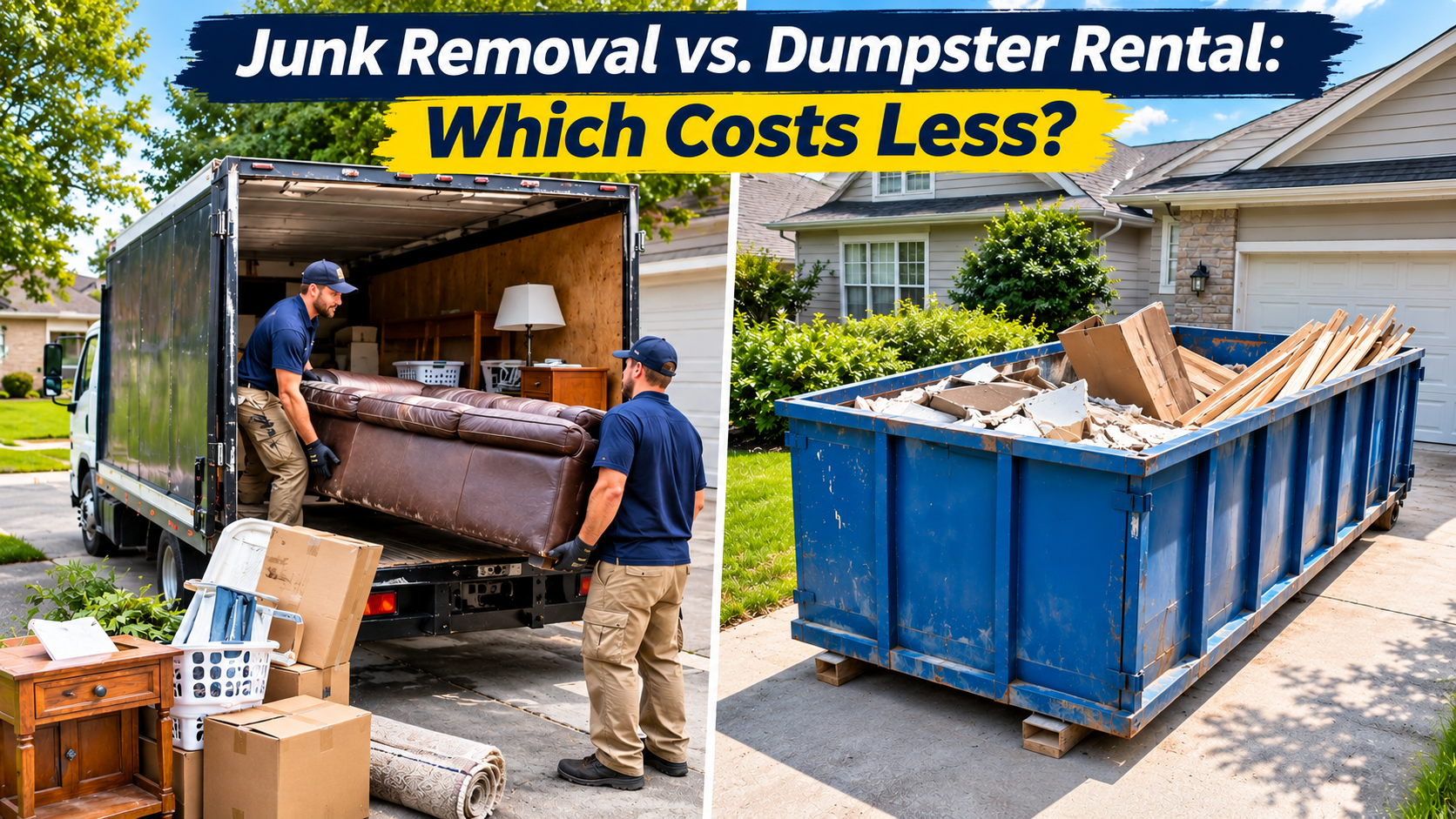
A garage full of clutter, a broken sofa, or piles of renovation debris can quickly turn into an expensive cleanup project. The challenge is deciding whether to pay for professional hauling or rent a dumpster and handle the lifting independently.
Choosing incorrectly could mean spending more on labor, rental extensions, or disposal fees than expected. Understanding Junk Removal vs. Dumpster Rental helps homeowners and property managers compare their options, uncover hidden expenses, and choose a cost-effective solution for the amount of waste and time involved.
Junk removal often saves money for smaller cleanouts, bulky furniture, and projects requiring professional lifting. Dumpster rental can be more economical for large amounts of debris accumulated over several days, especially when customers can load everything themselves. The cheapest option depends on local quotes, waste volume, rental duration, and additional fees.
What Is Junk Removal?
Junk removal services collect unwanted items from residential and commercial properties and transport them for appropriate disposal.
With full-service junk removal, a professional hauler typically handles lifting, loading, transportation, and disposal. This arrangement reduces the physical work required from the customer.
Common projects include furniture removal, appliance pickup, basement clearing, and residential junk removal.
Most providers calculate prices based on the amount of truck space used, item characteristics, and loading requirements.
For smaller cleanouts, paying only for the necessary removal capacity may cost less than renting an entire dumpster.
What Is Dumpster Rental?
Dumpster rental services deliver a large waste container to a designated property or approved location.
The customer fills the container during the rental period, after which the rental company collects it.
A roll-off dumpster is commonly used for remodeling projects, construction debris, property cleanouts, and large quantities of accumulated waste.
Rental containers come in different sizes, commonly measured in cubic yards. Unlike professional hauling, dumpster rental usually requires customers to move and load materials themselves.
This makes it practical for ongoing projects where debris accumulates over several days. However, heavy objects, rental deadlines, and weight restrictions can increase the final expense.
Junk Removal Cost vs. Dumpster Rental Cost
The biggest difference between these services is how customers pay for waste removal.
Professional hauling generally combines transportation and labor into the service price. Dumpster rental primarily covers container delivery, an agreed rental period, pickup, and specified disposal allowances.
According to Angi's September 2026 pricing guide, the national average junk removal cost is approximately $241, with many projects falling between $133 and $372.
The same guide estimates the dumpster rental cost at approximately $380 for a one-week rental, although container size and local conditions create substantial differences.
Estimated US Cost Comparison
Pricing factor | Professional junk removal | Dumpster rental |
|---|---|---|
Typical published benchmark | $133–$372 for many projects | About $380 for one week |
Charging method | Volume, items, labor, access | Container size, rental duration, weight |
Loading labor | Usually included | Customer responsibility |
Heavy-item handling | May incur additional charges | Customer must arrange loading |
Rental extension | Generally not applicable to one-time pickup | Additional charges may apply |
Disposal fees | Check whether included | Check weight and disposal allowances |
Which Option Is More Convenient?
Convenience can influence the actual financial value of a cleanup.
With DIY junk removal through a rented container, customers must carry materials to the dumpster, organize loading, and stay within the agreed rental conditions. Professional hauling generally requires less physical effort because the crew performs the main removal tasks. This difference matters when items are located upstairs, down narrow hallways, or inside difficult-to-access storage areas.
Benefits and Drawbacks of Each Option
Option | Main advantages | Main drawbacks |
|---|---|---|
Junk removal | Professional lifting, convenient pickup, suitable for bulky items | Labor can increase the overall price; scheduling is required |
Dumpster rental | Flexible loading, useful for ongoing projects, substantial container capacity | Manual labor, space requirements, weight limits, possible extension fees |
The benefits of junk removal are strongest when lifting, access, and time are major concerns.
Dumpster rental advantages are more significant when customers already have the labor and space needed to handle a substantial quantity of waste.
Neither option is automatically the cheaper choice for every project.
Hidden Costs and Local Disposal Rules
A lower advertised price does not always produce a lower final bill. For dumpster rentals, additional expenses may include excess weight charges, rental extensions, prohibited-material fees, or permits for placing containers on public property.
For professional hauling, difficult access, unusual item weight, additional labor, or special disposal requirements may affect the quote.
How to Choose the Most Affordable Option
Choosing junk removal or dumpster rental becomes easier when customers compare the complete project cost rather than the advertised starting price.
A practical approach involves five steps:
- Estimate waste volume. List the items or measure the approximate quantity of debris.
- Identify material types. Separate ordinary waste, recyclables, and restricted items.
- Consider the timeline. Decide whether everything can be removed in one visit or requires several days.
- Calculate additional costs. Include labor, permits, excess weight, and possible extensions.
- Compare written quotes. Confirm exactly which services and fees each provider includes.
For a fair comparison, both estimates should cover the same items, access conditions, and disposal requirements.
The following calculation helps illustrate the decision:
Dumpster total = Rental fee + loading labor + permits + overage or extension fees
Junk removal total = Quoted pickup fee + any excluded or additional charges
Customers seeking further cost-saving ideas can also review this guide to inexpensive junk removal methods.
Compare Local Junk Removal Options
My Easy Junk Removal connects homeowners, renters, property managers, and businesses with participating local hauling providers. Customers can explore available services and compare provider options based on their location, waste type, and project requirements.
Frequently Asked Questions
Is junk removal cheaper than renting a dumpster?
It can be, especially for smaller loads, individual furniture items, and jobs requiring assistance with heavy lifting. Large ongoing cleanouts may cost less with a dumpster when customers provide the loading labor.
What is the cheapest way to remove a small amount of junk?
Eligible municipal bulk collection, donation, or self-transport may cost less than private removal. If those options are unsuitable, comparing single-item pickup prices can help identify an economical alternative.
Is dumpster rental better for construction debris?
Dumpster rental is often practical when approved construction materials accumulate throughout a project. Heavy debris restrictions, weight allowances, and the available loading space should be confirmed before renting.
Does professional junk removal include labor?
Full-service providers generally include standard loading and hauling labor. However, stairs, difficult access, unusually heavy objects, or special handling may affect the final quoted price.
Are dumpster rental prices based on weight or size?
Both factors may matter. Companies commonly charge according to container size and rental duration, with weight allowances that can trigger additional fees when exceeded.
Can appliances and electronics go into a dumpster?
Acceptance depends on the rental provider and local disposal rules. Refrigerators, televisions, batteries, and certain electronic products may require separate handling or recycling.
Is a dumpster permit required in the United States?
Permit requirements depend on the jurisdiction and placement location. Street or sidewalk placement may require authorization, while placement entirely on private property may be treated differently.